Showing posts with label #Books/Reading. Show all posts


Who is the church for? 
Have you ever asked yourself this question?

When people find out that I am a Pastor, they always ask where the church is located, and comment on the facility if they have been by the place. The second question that almost always follows is something like: Who comes to your church? Or, more specifically: "Are there any people at your church that look like me?" And finally: "Is your church a place where I would be accepted?"

Andy Stanley, author of "Deep and Wide" and founding Pastor of Northpoint Church in Atlanta Georgia declares that he unashamedly wanted to create a church where unchurched people love to attend. His goal is to aim in worship to get as many people through the doors of the church as possible so that they may hear what it means to have a relationship with Jesus. 

Stanley leads a church that is without question "attractional" in its approach to drawing people to their church every weekend, and can appear on the surface to become Biblically shallow in doing so.  "Deep and Wide" however, is a good read that talks about some of the ways his church is being very intentional about creating environments where true life change occurs, and deep rooted Biblical discipleship happens. Pretty exciting stuff. Pretty specific stuff however, for the mega-churches of America. Pretty different from our context here in Buffalo, NY.

So, to ask the question again, with our local church context in mind... Who is the church for? Who are we trying to reach? Who are we pinpointing to help you "find your place?"

Where we differ from Stanley, who has a primary focus on the unbeliever, is that we believe the exclusive purpose of the church Is to glorify God, and make disciples. We must, above all else, be certain to  make everything we do about Him! Who is the church for? Why, its for Jesus Christ!

We don't believe it's purpose is to make the spiritual seeker feel comfortable, and unchallenged in their current state. Jesus warns his followers, that the Gospel will cause division. The Message of Christ will require a choice: to follow or to turn away. You cannot be neutral about Jesus. You're either for Him or against Him. You either follow Him or you oppose Him. He will not allow you to be indecisive.

That said, I believe churches should be both theologically sound, and culturally relevant. We must not be a stumbling block to those who would hear and respond to God's greatest gift. Hardly a month goes by without another article being written analyzing who is leaving the faith and why. While there is no one-size-all answer for why people reject Jesus, a recent article by Doug Ponder at Christianity.com listed Religious Hypocrisy (when Christians who acknowledge Jesus with their lips, walk out the door, and deny Him by their lifestyle) and Gospel Inoculation (when a person thinks they’ve heard the gospel and rejected it, when in reality what they rejected was not the gospel but a dead, false, form of the real thing) as the primary barriers for those far from Christ.

Let us be a people who keep the main thing, the main thing. We will always preach Christ, crucified. We will however, also be intentional about rejecting religious hypocrisy and calling out a counterfeit Gospel... just like Christ did. This will always be a bit of a balancing act, but may we never become the barrier, for those seeking Christ. May all who would come to Him, be motivated to do so! May we not be a hindered effort to that calling. That, is really who the church is for! 

Just as I am, though tossed about 
With many a conflict, many a doubt 
Fighting and fears within without 
O Lamb of God, I come, I come 

Just as I am, and waiting not 
To rid my soul of one dark blot 
To thee whose blood can cleanse each spot 
O Lamb of God, I come, I come

- Pastor Milo
______________________________________________


I've experienced a fair amount of difficulty in my life. However, I wouldn't say that I've lived a "hard" life. I've experienced a fair amount of personal discomfort in my life. However, I wouldn't say that I've lived a "tough" life. I have been blessed. I have been sustained. I have been loved. While I've survived some trials, God has protected me from many of the unimaginable things and situations I watch many other process through day by day. 

This week just happened to be one where I was inundated with emails, phone calls, and drop-ins from people experiencing tremendously hard times. Some struggles were of their own making, others were outside of their control... but the anxiety and concern on their faces was very, very, real and tangible. People are losing their jobs, people are losing their loved ones, and people are losing hope. What can say or do to help?

Katherine Wolf is a wife and mother who suddenly experienced a massive brain stem stroke in 2008 while putting her six month old down for his morning nap. After a nearly unresponsive day in the hospital, later that night she was rushed into micro-brain surgery that required the removal of part of her brain. Her relationship with her husband Jay, her relationship with their baby James, and her relationship with the rest of the world would be altered forever. Her life would clearly not go as planned.

Twelve years later, Katherine is still bound to a wheelchair. Yet, she shares this: "Life defines us, but suffering redefines us. Ultimately, hope refines us, transforming us from within in ways we could have never imagined. For that, and for countless other blessings, I am so grateful to God."

Katherine's story is far more extreme than my own. Many of the stories Ive heard this week are more difficult than mine. However, the lasting and refining hope she speaks of is only going to be found in one place. True hope is found by fastening to the rock that I cling to! His name is Jesus Christ! 

Let's be honest, COVID-19 has us all sailing through uncharted waters. The storms are fierce, the emotions are raw, and the anxiety is rising all around us. But the Bible tells us that we don't have to feel lost. Instead, we have this HOPE as an anchor for the soul. A HOPE both sure and steadfast. Grounded firm and deep in the Saviors love. Praise be to God!

When all seems lost; hope can be found. People are losing their jobs, people are losing their loved ones, and people are losing hope. What can say or do to help? Bring them hope!

Pastor Milo
___________________________________


Imagine you find yourself stranded on a deserted island with nothing but a copy of the Bible. You have no experience with Christianity whatsoever, and all you know about the Church will come from your reading of the Bible. How would you imagine a church to function? Seriously. Close your eyes for two minutes and try to picture "Church" as you would know it. 

Now think about your current church experience. Is it even close? 

Can you live with that?

These are the opening words of the book "Letters to The Church," by Francis Chan. Our leadership team studied it together back in 2019, and wrestled through many of its difficult lessons... particularly the ones where the early church is contrasted with the American church. We had to come to grips with Chan's underlying argument that something is, quite in fact, wrong with the American Evangelical church. The consumerism that defines our shopping behaviors, our entertainment choices, and our social interactions with one another, has become part of the hallmark of our churches as a whole... regardless of its size.

As the Bride of Christ, the local church should be known as a loving community, humble in service, with faithful pastors, a readiness to suffer, and an overwhelming hunger for missions both locally and globally. This is what is pictured for us in the Book of Acts, and what was ultimately commissioned by Jesus Christ himself when he told His followers to "Go into all the world..."

Francis Chan does a good job in this book of sharing mission stories from around the world where Gospel minded churches are thriving, as well as deconstructing what went wrong with the American church. However, our leadership team concluded after reading this book, that the author does little to help us to reconstruct things in a way that would please the Lord. And really, isn't that what we need to be at work doing?

A year later, the American church in 2020 comes to the table with a vastly different landscape in front of us. Our snow globe has been shaken considerably by a global pandemic, and our churches have been pressed to strip away all that is unnecessary, and focus on only the essentials needed. Essentials required for Christ-centered worship experiences, for Biblically nurturing relationships, and for Apostolically oriented mission efforts. Isn't this closer to the snapshot you pictured in your head earlier? 

For the churches in America who carved away at what was standard, and found what was absolutely necessary... We've made some steps in the right direction. Let us not lose this focus when the world returns to "normal."  

 - Pastor Milo
___________________________________________________

I bumped into a friend from college over the Christmas break. He and I haven't done a very good job of keeping in touch with one another, and before we realized it, 15 years had gone by without any contact. It was really good to catch up. We talked about our families, and about our jobs... and of course covered some of the stories from the good old days. It was like we picked up right were we left off. 

I had not realized that my friend had left music education to pursue vocational ministry full-time and was now a Minister of Music in a prominent church in South Carolina. Our conversation shifted to talk about some fo the similarities and differences of working in the public marketplace, against working in the ministry of the local church. One question seemed to linger. If a church leadership team only get a few hours a week to interact with it's key leaders, and key volunteers, how can we be sure to make that time count? 

After our discussion, I decided to read a book that has been on my to-do list for a while. The One Minute Manager by Ken Blanchard has been published for 35 years, but still tallies as a best seller year after year. It's a quick read, but here are the main ideas all at once. In one minute, be able to communicate a goal. In one minute, be able to praise someone's efforts. In one minute, be able to redirect when someone is out of alignment. 

After writing the book, Ken Blanchard became a believer, and changed his focus to an organization called Lead like Jesus. Turns out, Blanchard found that Jesus used these very same tools when interacting with his disciples while in ministry himself. Funny how that works isn't it? The best ideas are the ones we learn from Jesus!

Our time is valuable. Our time together as church people is limited. How can we make the most of it? Maybe these simple truths will be useful to you as you interact with one another in the coming year. 

Pastor Milo

______________________________


We are about to close the book on 2019. Can you believe it? On the even years we typically stay home, but we leave Buffalo on odd years over the Christmas break to drive the 750 miles to see family in the Carolinas. It's a very long trip, and we typically drive it through the night in order to keep our kids asleep for a good portion of it. Some years the travel is more difficult than others. Bad weather, or vehicle troubles can change the whole dynamic of the trip. Still, without fail, mile after mile ticks off the odometer, and by morning we are seeing the sunrise over the Blue Ridge mountains. We are going to make it! I suppose seeing the years change on the calendar has a similar effect.

I've just finished Leading With a Limp by Dan Alexander. In it, he talks about the Biblical life of Jacob, and how he limped his entire life after wrestling with God. Alexander encourages his readers that is is healthy, and even God honoring, to use the vulnerable things that make us limp as leaders, rather than masking them or pretending that the flaws don't exist. For me, 2019 marks twenty yrs in Christian Ministry. In 1999, I was asked to serve as an assistant youth director for military brats (their term, not mine) on the Little Creek Navy Base in Virginia Beach. That seems like it was really a lifetime ago! Students from that youth group now have well established families and decorated military careers of their own.    

Since those early days, I have made many significant mistakes along the way in ministry. However, a reoccurring theme and therefore leadership limp in my life is to isolate myself and assume I can "do it better" alone. Then, when I become overworked and exhausted I try to blame everyone else for not carrying their weight. This contributed to the formula that cost me my job at a previous church, and is the recipe that knocks many pastors out of ministry all-together. I pray that I'm learning to lead from my limp. I can't do it alone. Dan Alexander says it this way: "Weakness. Don't lead without it."

I was encouraged by an office visit from one of our members, who just went on and on about Bryan Long, and Mario Delgado, our Associate Pastors at Randall Church. This person talked about the great value our church has in stock by having an interdependent leadership team, carrying and sharing the load of preaching, teaching, shepherding, and equipping the saints for ministry. I need you to know that these Godly men keep me in spiritual alignment. My own leadership flaw(s)are not masked, but actually pretty obvious. And, by God's grace, these ministry ninjas not only fill the gaps, but excel in their own development as well. To God be the glory! Mario... Bryan... with my whole heart, I thank you.  

Friends, as we close 2019 together, we remind you that we cannot do ministry alone financially either. At this point in our annual budget, we have spent $248k of the planned $250k in spending. However, our YTD offerings are only at $225k. This is not terribly uncommon from previous years, as many people use December to catch up on their giving for the year. So, won't you consider donating a year end gift online at give.randallchurch.org to help us close the $25,000 gap? Then, let us limp into the new year together! His strength is made perfect in our weakness. Praise God from whom all blessings flow!
 
- Pastor Milo
___________________________________________


I saw my neighbor taking pictures of a kayak in the front yard yesterday. He was positioning it in a way where he could capture the sun setting through the trees, over the bow of the boat. Really, it was a pretty cool shot! This is isn't all that unusual for Aaron. He often buys and sells hiking and biking equipment through online postings of various sorts, and I'm certain this photo will capture someone's attention who wants to buy a kayak and paddle off into the sunset.

Aaron Coe and Dustin Willis authored a great book by the title "Life on Mission" where they share a great insight about what it really looks like to be intentional about relational evangelism. One of the central messages learned from the book is that everyone is a missionary, whether you are a plumber, a school teacher, a doctor, a student, a retired person, or a stay-at-home mom or dad. Isn't missionary work only to be done by professionals, way over there, on the other side of the world? No. Probably not. When I saw my neighbor taking snapshots of the kayak, I was reminded immediately of something that happened a couple years back that changed things between us from that day on.

You see, Aaron and I live directly across the street from one another. In fact, our driveways are so perfectly aligned with one another, that we have even accidentally backed into each other. Aaron knows I am a cycling enthusiast, he sees me ride to work most days of the week, rain or shine. He knows I'm a parent, and he sees me standing at the bus stop with the kids each morning. He knows I'm a pastor, he watches me come and go from church on Sundays. But does he know I love Jesus? Does he see the Fruit of the Spirit of love, joy, peace & self control in me?

There was a knock at the door... With his vehicle loaded and kayaks on the roof, Aaron, frustrated, shared with me that his millennial college students were too busy to spend the afternoon on the water with him as previously planned, and would I like to go with him instead? With four active kids and a demanding church schedule, dropping everything to go was anything but easy. But, when I did the 3-4 hours we spent together that day ended up being a really great time. We talked about a number of things, but hopefully the main thing he heard from me (while unspoken) was that God's love always has room. God's ear is always ready to listen. God's schedule always has time for him. This is one recent example where I feel I lived Life on Mission. What about you? Need some ideas for yourself? Give this book a read!          

Pastor Milo
@milowilson
_____________________________________________


A lady took my seat in church a while back. It's not that important really. She is a very nice lady, kind and considerate. A good friend, in fact. There were several other seats available. I can sit anywhere. The people in our congregation are as friendly and caring as you will find anywhere in the world. A person should be comfortable sitting anywhere. It's no big deal. My seat is in the seventh row back from the front of the church. I'm sure she didn't intend to take my seat. She just wouldn't do that. Nor would anybody else in our fine church. 

It doesn't make that much difference. My seat is on the end of the pew, on the north side by the windows. On your left as you come into the sanctuary. I can rest my left arm on the end of the pew. It's a good seat. But I would never raise a fuss about a seat. She probably didn't intend anything personal by taking my seat. I would never hold a grudge… Actually, it was about three months ago when she took my seat. I really don't know why she took it. I've never done anything to her. I've never taken her seat. She really took it because it's one of the best seats in the house. That's why she took it. 

This is the way great social injustices begin: abusive people taking other people's seats in church. This is the way the seeds of revolution are sown. A person can only stand so much. Where is it going to end? If somebody doesn't stand up and be counted, nobody's seat will be safe. People will just sit anywhere they please. And the next thing they'll do is take my parking place, too. This is what's the matter with the world today…

Zean Carney, Editor The Banner-Press
David City, Nebraska, 9 May 1991
_____________________________________________


I come from a musical background. I’ve formally studied a few instruments, and performed as a “professional” for a number of years before having kids and pursuing full-time ministry. What I tell many beginner students is, that, over time playing music gets significantly easier once there is an understanding how western music is put together. Musicians learn to understand a common language, and over time can perform together with ease. 

Whether it is classic rock or a classical concerto, songs generally have a standard framework or “song structure.” It often consists of three sections, most notably a verse, a chorus, and a bridge. Instrumental music won’t term them in the same way, but will generally carry sections called exposition, development and recapitulation. Keeping this in mind, there is tremendous variety and diversity within the limitless libraries of music, yet they share common and standardized format in how they are framed.

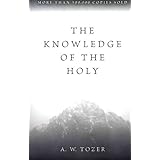
A.W. Tozer wrote an inspiring book called The Knowledge of the Holy in 1961 on a single train ride from Chicago to Texas. You should get your hands on it. The book is 23 chapters in length and follows a consistent pattern through each chapter, a pattern by which we, the reader, might actually be able to converse in the language of Almighty God. Tozer himself suggested “since this book is neither esoteric nor technical, and since it is written in the language of worship with no pretension to elegant literary style, perhaps some persons will be drawn to read it.”

Writer Jordan Chamblee sets the scene in this way: The gentle rhythm of the train and the hum of muted voices threatened to lull A. W. Tozer to sleep. His eyelids were heavy and his back ached from the less-than-comfortable springs in his seat. He squinted at the hurriedly jotted lines in his journal, which grew shakier as they wound towards the place where he had stopped, pen poised over the page held tightly in cold fingers. He brushed away the crumbs from his dinner – a cold piece of toast – that had fallen on the page. Some of the crumbs found their way into the gutter between the pages, and after a tired attempt to remove them with a fingernail he let them be. He breathed deeply, set down his pen and rubbed the grit out of eyes with his knuckles. He shook himself a little and looked back at his writing. “… Faith is the gaze of a soul upon a saving God.”  

“The gaze of a soul.” Page by page, chapter by chapter, the reader is drawn in to listen to the melody, feel the rhythmic pulse, and fully immerse into a new song. The soaring tune of what the Christian can expect to discover when his heart is set on pursuing God. Here is the framework I see for the song.

Start With Prayer. (Verse)
Seek The Heart of God. (Chorus)
Study The Surrounding Culture. (Bridge)

Biographers tell us that Aiden Wilson Tozer was known to arrive at his office in the early morning, change into a pair of old pants so he wouldn’t wrinkle his slacks, and pray for a up to three hours at a time—beginning on the couch, but soon moving to the floor, face buried in the carpet. This was a man who pursued hard after God. Many of us have the desire to work and do mighty things for the Kingdom of God, to be “on fire” for Jesus. With all the best of intentions, have we forgot to pursue Him? Have we actually learned what true worship is? 


​

As a parent I'm always monitoring my children's choices in friends. Most kids start out being willing to play and converse with anyone, as long as they are in a similar age range. Even that has very few rules, as our 4 year old little guy often interacts with teenage boys three times his age, height, and weight, and assumes that they are his peers. I think this is a beautiful thing.

Who our kids choose as companions says a lot about them. Perhaps they choose to befriend someone that other children their own age overlook and marginalize. This would mean a great deal! Sometimes they have a close friend that we parents approve of, but when that close friend begins to make poor choices again and again, we realize that it may be best for our family member to distance themselves for a time until behaviors change.

As a local church pastor, I get the rare opportunity to meet a large number of new people. Not every profession opens a person up to this much interaction with other humans, but mine does. I believe it is an honor to do so. Although I still have a long way to go, I made it an unspoken goal early on to remember as many first names as possible. Nothing has earned me more props than being able to surprise people by addressing them on a personal level.

Unfortunately, being able to remember people's names isn't enough to counter the painful reality that being a pastor is a profession often marked by isolation and loneliness. Finding and forming intimate friendships can be a frightening and elusive challenge. If this is a recurring challenge for pastors, it occurs to me that it may be an issue of great concern for many of our people. Are true friendships a concern for you?

Many of my first time meetings become long term relationships, but only a few grow into and become dear friendships. I read a great article this week by David Butler, a Send City Missionary in Boston for the Southern Baptist Convention that calls these friendships "rare," and "rugged." I've included an excerpt here:


A good place to start is realizing true friendships aren't something you can make happen. In fact, true friendships are relatively rare, compared to other relationships. That's largely because they are first discovered and then forged. You discover a common interest, a shared passion, a mutual affinity. You resonate with each other at a deep level, stronger even than family ties. You "stick" together."

"A man of many companions may come to ruin, but there is a friend who sticks closer than a brother." (Prov. 18:24)

While you can't make a true friendship happen, they don't just happen. Forging true, life-long, life-giving friendships is hard work. Taking a cue from Proverbs, I've found at least 4 "rugged commitments" that mark the kind of friend we need and can be to others, both inside and outside of our ministry context. I use "rugged" because what we long for doesn't come easy.

1. Available without exception. True friends are there regardless of the moment, demand, or situation. They are there when the chips are down. They've got your back. They bring relief. "A friend loves at all times, and a brother is born for a time of adversity." (Prov. 17:17)

2. Aware and respectful. True friends are emotionally sensitive and connected at the soul level. They listen closely, see beneath the surface, pay attention. "Like one who takes away a garment on a cold day, or vinegar poured on soda, is one who sings songs to a heavy heart." (Prov. 25:20)

3. Keep healthy boundaries. True friends aren't possessive, demanding, or smothering. They avoid the trap of expecting others to "meet my needs." "Seldom set foot in your neighbor's house — too much of you, and they will hate you." (Prov. 25:17)

4. Provide trusted counsel. True friends care enough to point out not just your strengths, but your weaknesses as well. They confront you not to tear you down, but to prove their love for you. They encourage and challenge. "Perfume and incense bring joy to the heart, and the pleasantness of a friend springs from their heartfelt advice." (Prov. 27:9) "Better is open rebuke than hidden love. Wounds from a friend can be trusted, but an enemy multiplies kisses." (Prov. 27:5-6)

I love these four commitments. These are not going to happen in every relationship you forge into, but every once in a while a true friend comes along worth investing the effort in. Your spouse, a close family member, then maybe just a handful of others in a lifetime. 

Do you have a few rugged friendships? Are you a rugged friend?

Pastor Milo
@milowilson


Have you had any "crucial conversations" lately? We have them everyday, or at least the potential to have them... Crucial conversations. Conversations where where there are different opinions, strong emotions and high stakes. Are you ready to face the hard conversations in a way that brings life and peace?

Much of the business world is aware of the book Crucial Conversations by Joseph Grenny, but it is relatively new to me and to many of our church attendees. It was important to learn about these types of crucial conversations because quite honestly, people who get things done and are effective are those who know how to handle them. 

As Christ-followers we should always speak the truth in love, and that just means you hold these crucial conversations for the purpose of righting a wrong, and also helping another person understand where change is needed. You speak the truth with the right motivation.

In a coffee meeting I had this week with some other young men like myself raising children and trying to succeed in their jobs, we found ourselves discussing the ups and downs of parenting. Some days fathers feel like they have really connected with their children. You feel like you have leaned in for a difficult moment that could really change a child's trajectory in the future. Similarly, a moment of conflict with  a spouse can sometimes takes months to repair. We committed to praying as we left for work for one another in the coming week, and the crucial conversations we might face.

Christian author Mary Whelchel says: "Every crucial conversation needs to be surrounded with prayer. If you know in advance that such a conversation will occur, obviously you have time to pray specifically about it. If not, that's when you send up emergency prayers for that conversation."

Often times, broken relationships need to be, and can only be restored with some form of crucial conversation. After pursuing God's heart for the situation through fervent prayer, consider the following strategies from Joseph Grenny for navigating a crucial conversation.

1. Start with the heart - begin with the right motives
2. Learn to look - know where your own emotions want to run
3. Make it safe - build parameters that keep discussion from silence or violence
4. Master your stories - be sure not to hear a story thats not being told
5. State your path - share the way you experience the event in question
6. Explore other's paths - allow the other person to fully share their perspective
7. Move to action - Make a decision on how to proceed, even without resolution

How committed are you to finding restoration in broken relationships? Are you willing to lean in and embrace the crucial conversations? I pray that you are. I pray that our churches would be a place where this happens often. "The mouths of the righteous utter wisdom, and their tongues speak what is just."  (Psalm 37:30)

That's a very good prayer for us when we're entering an emotional conversation—that God will enable us to utter wisdom and speak only what is just.

Pastor Milo

When looking at the birth and ministry of Christ, we will see that what He taught and represented was entirely different to what the cultural norms were around Jesus. Many have looked at what Jesus represents and call it the upside-down Kingdom. It's  really messes with the things we enjoy to feel about ourselves.

Those things that make us important in our world become unimportant in the upside-down Kingdom. Here are some of the things about His Kingdom:

The Upside-Down Kingdom
- To lead, you must serve.
- To live you must die.
- To gain favor you must cease your labors.
- To be strong you must be weak.
- To be promoted you must promote others.
- To be rich you must give everything away.
- To win you must be last.

At our church we are experiencing growth in some very exciting ways. We are near full capacity in our children's programming space, and our youth have begun meeting on multiple nights during the week to accommodate their rapid numerical growth. In addition to our people are serving one another well, they are regularly finding ways to serve local neighborhoods and make the presence of Jesus Christ known to people within their own communities.

You might say: "Wow!" You might say: "What an improvement!" You might even say: "Keep that up and people will really start to talk about our church again!" You might not realize however, that in these moments a church must make a choice. As Jeff Christopherson writes: Are we going to be Self Seekers, or Kingdom Seekers. Are we going to be Brand Expanders or Kingdom Expanders? Is it going to be about us, or is it going to be about Him?

This book was a great reminder. Which kingdom are we serving? The Kingdom of Heaven, or the Kingdom of Darkness. It is a tremendously practical book that will not only convict the reader of selfish ambitions, but also get him the tools by which to lead the church forward in Kingdom Seeking and Kingdom Expanding. I highly recommend this book for any church leader, but specifically for the church planter, and church revitalizer.

The Kingdom Matrix and the Upside-down Kingdom is why we must plant churches. The Upside-down Kingdom is why we must plant autonomous churches.

Is your church designed to be upside-down?


Earlier this month I was invited to join a group of men running the Tough Mudder Challenge here in WNY. Actually, to be more accurate I ran the Half Mudder which is only half as tough as the tough mudder, because I am only half as tough as those tough guys who run the tough mudder. Did you get that?

I had an absolute blast completing the course. We tackled obstacle after obstacle, we saw mud pit after mud pit come and go one by one, and before you knew it, our squad sloshed through the final inflatable arch hands in the air, cached in the gooey brown mushy stuff.  I had mud all over my body, hardened in my hair, in my ear canals, up my nostrils, and somehow between my toes inside of my socks, even while inside of my shoes. We were victorious!

A few years back, Mark Batterson wrote an insightful book by the title In a Pit With a Lion On A Snowy Day, which details the account of one of David's mighty men Benaiah and his encounter with a lion in 2 Samuel 23. Batterson writes: "Encountering a lion in the wild is typically a bad thing. A really bad thing! Finding yourself in a pit with a lion on a snowy day generally qualifies as a terrible, horrible, no good, very bad day. I don't think anyone would have bet on Beniah winning this fight - not even the riskiest of gamblers. Yet. when the snow settled, the lion was dead and Benaiah was alive. There was one set of paw prints, and two sets of footprints."

People generally blame their circumstances for what they are. It is much easier to look at the hand you have been dealt and see it as an excuse for not going further, or accomplishing more. In fact, in an attempt to show others empathy and encouragement we will often offer them additional excuses for why things haven't worked out for them as they hoped. However when we look at Scripture, the individuals that are highlighted, the heroes of the faith that are recognized, are not the ones who found the path of least resistance.

32 And what more shall I say? I do not have time to tell about Gideon, Barak, Samson and Jephthah, about David and Samuel and the prophets, 33 who through faith conquered kingdoms, administered justice, and gained what was promised; who shut the mouths of lions, 34 quenched the fury of the flames, and escaped the edge of the sword; whose weakness was turned to strength; and who became powerful in battle and routed foreign armies. [Hebrews 11:32-34]

When will the church realize that spiritual opposition is actually spiritual opportunity? When will we embrace that playing it safe is risky, and pursuing hard after Gospel-centric living should be the internal engine that motivates all we do? When you feel like your eyes just locked in with a lion, will you advance because you know that God has always defied the odds? I believe God has created us to pursue. Created us to endure. Created us for more. 

I believe that if you are in the pit today, just like he did in 1 Samuel with Benaiah, just like he did in Genesis 27 with Joseph, God will use it in your life for good. What some people see as a bad break, God turns into a big break. These are the moments that will change lives forever. 

It's time for the church to "grab opportunity by the mane." It's time for the church to advance. The time for excuses and comfortable nominal Christianity has long passed its due. It's time we see the Gospel transform our living. The time is now.

Pastor Milo


In 2008 during a highly contested race for the nomination from the Democratic Party United States Senators Barack Obama and Hillary Clinton were using every trick in the book they could think of to make just the slightest hole or tear in their opponent’s political sails. In March of that year, Hillary ran an ad known now as the “red phone,” where she questioned Obama’s lack of experience. The commercial is set at 3am,  and over a montage of sleeping children, a red phone rings incessantly, as the narrator states that something is “happening in the world” — although it never says what this is — and that Mrs. Clinton is better able to handle such danger because of her experience with foreign leaders. While making late gains through the ad, her efforts came up short and Mr Obama was able to secure the nomination despite her ad’s tactical success. Nonetheless the message rang clear, “Who is suitable to answer the call?”

Following the life of Jesus in the Biblical New Testament, the narrative Gospels give multiple examples of Jesus calling people unto himself. Carrying more gravity however than a phone ringing in the White House, this calling has the importance of eternal significance. Also different, this call is not  meant to solely rest upon the individual. “Responding to the call requires courage, but we are not purely on our own. The challenge is not solely up to us. A bootstraps rise is unnecessary as well as unrealistic. Responding to the call means rising to the challenge, but in conversation and in partnership - and in an intimate relationship between the called and the Caller,” says Os Guinness. His book The Call  is a delicate balance of the role of our Heavenly Caller, as well as our role as His chosen. “When it comes to identity, modern people have things completely back to front: professing to be unsure of God, they pretend to be sure of themselves. Followers of Christ put things the other way around: unsure of ourselves, we are sure of God.”

It has been my experience that most people think of their calling in life in simple terms, simple steps and simple scenarios, such as a phone ringing off of the hook and all individual has to do is go and pick it up. As I grow older however, I have found very few pastors, theologians, or spiritual elders who write about, or talk about their own calling in this matter. Instead comma it appears that the ordinary is discussed more than the extraordinary. The actions of a person behind closed doors when no one is looking, is more relevant to a Godly person's calling in life, than what they do while standing in front of a crowd. Os Guinness illustrates this point well when he shares the story of two young Dutch priests eagerly responding to Martin Luther’s teachings during the early days of the Reformation.

“The church building was essential to worship and certain other aspects of the church's corporate life. Yet, the two priests locked the church doors on Sunday night as a statement that followers of Christ were to live their whole lives to God. The bricklayer with the trowel, the farmer behind the plow, the artist before the easel, the cook beside the oven, the magistrate presiding at the bench, the parent at the crib - each one was to live out his or her calling without regard to titles, hierarchies, and distinctions.” What a beautiful picture! I wonder if I were a pastor in the region at the time, if I would have had the boldness to step out with these young leaders. I really don't know. Yet, if I seek to follow the call in a Biblical manner, I don't have to be sure of myself. In fact, quite the opposite. All I have to be sure of is the one in whom I am following. All I have to be sure of is Jesus.

In a chapter titled “Last Call,” Guinness concludes: “We are on a journey and we are truly travelers, with all the attendant costs, risks and dangers of the journey. Never in this life can we say that we have arrived. We know why we have lost our original home, but more importantly, we know the hope to which we are going.” This was a fitting way to bring the final chapter to a close. The book is filled with great illustrations about world leaders like Julius Caesar, Winston Churchill, and Martin Luther King. Each of these men seemed to know exactly what it was they were born on the planet to accomplish. Yet, there's no way the reader can hear the words of Os Guinness and miss this point: The only thing of true significance is a life lived for Jesus Christ.


At age 35 it would be very foolish of me to try to outright define who I am. Particularly in the last few years, it seems like the words in various books jump off of the page, or the illustrations of various challenging speakers seem to come to the same point: “you still have a lot of growing up to do.” Nonetheless, one of the skill-sets that God seems to have given me that I have seen at least moderate success in a short span of 15 years in ministry, is the aptitude of a church strategist. I grew up in a fundamental church in the country, have served in multiple progressive and new church plants in various environments, and currently serve as pastor of a church with nearly two centuries in existence. As time passes, my experience continues to become more and more diverse. Yet, I’m learning that to be most effective I need to talk less and listen more. I’ve become intentional about developing an “elevator speech,” or “napkin notes” for what is most important and most compelling about the organization I lead. My belief is that people will be most excited about where we are going, and will engage in activity with us, if I can relationally connect them to the heart of our ministry.

I was stunned and taken back however about 2 years ago when my wife approached me lovingly one day about our four kids and home and said: “Why is it that you can scribble down the mission of our church on a napkin but you don’t have any idea where our family is headed?” Point taken. She had me pinned down to say the least. What would be my response? Why was this important? Where would our family be directed? How would we get there? Her poignant question triggered what seemed like thousands of follow-up questions in my mind, and the reality was that I didn’t seem to have any answers for any of them. It brought me to my knees in prayer, it challenged me to read some books outside of the “church strategic plan” section of the bookstore as well as my own library, and most importantly it motivated me to look at God’s word with new eyes. What would be our family mission statement? What would be our family values?

One of the helpful books in this process was actually assigned to me in a coaching network. Although the work was new to me, it had been out for more than 20 years and has high reviews across the board. Yet, I was reading Tedd Tripp’s Shepherding A Child’s Heart with a fresh set of eyes. Furthermore, the concepts of the book seemed fresh to me as well: “The Scripture teaches that the heart is the control center for life. A person’s life is a reflection of his heart.” “When we miss the heart, we miss the glory of God. One of the most important callings God has given parents is to display the greatness, goodness, and glory of God for whom they are made. I want my kids to have a heart hurt for the things that God’s heart bleeds for. How can I do that if I am only disciplining their behavior, and not deal with the reason behind their poor behavior. In a similar fashion, I can reward positive behavior without ever encouraging my children to see God being glorified when they choose live life with a joyful attitude.

I’ve had to make some adjustments. I’ve had to re-think how I parent,  and stop making the assumption that if I am generally engaged in their lives that they will start to “get it” in regards to giving their heart to God. I will need to communicate with them regularly, and it wouldn’t hurt to have a few major talking points along the way. Tripp says: “A regular habit of talking together prepares the way for talking through strained situations. You will never have the hearts of your children if you talk with them only when something has gone wrong .”  I've had to make some adjustments in my schedule. there are two mornings a week that I no longer am able to get the physical exercise I had blocked out in my calendar previously. Perhaps I’ll put on a few pounds in the end, but it will be worth it. Instead, I have a date with daddy with each of my school-age daughters one morning a week before classes start.

And do you know what? I have a better idea now of what it is I want them to know. I have a better idea of what biblical truths I want to share. Also, I have a better idea from this book how to communicate with them as they grow into different life stages. So here is how I hope to shepherd my children’s hearts. So here is what I want to communicate to my family. So here, is my “elevator speech.” Here is what I believe will change their lives for eternity:

BE: Who You Are (Ephesians 1:1-2)
KNOW: Whose You Are (Ephesians 1:3-4)
LOVE: Actions Speak Clear (Ephesians 1:5-7)
GO: Adventure Is Near! (Ephesians 1:8-10)


My introduction to preaching was a slow one. I began ministry in a volunteer capacity working with military brats whose parents were stationed on our base for varying amounts of time. I certainly did my fair share of preparing lessons to teach, but I rarely called what I was doing preaching. Over the years that followed, my responsibilities expanded, as well as my involvement in the local church, and in time a part time salary. Still, I was not in the habit of preaching. Later, after receiving a bachelor's degree I began vocational ministry with the title: Minister of Worship and Outreach. Here I sparingly began receiving requests to preach from time to time. I was asked to preach in Romania while on a mission trip, asked to preach at a workshop on the topic of “worship wars,” and asked to preach to middle school students meeting on a weekly basis through a program called “Released Time.”

After serving in some ministry capacity in four different churches over thirteen years, I felt God calling me to step out in 2013 and plant a new church in the Buffalo Northtowns called Renewal Church. Things were going well in our pre-launch phase, and I felt quite good about many aspects of the church we were birthing. We seemed to be matching up with a real need in our community, and God seemed to be organizing an ideal core team to fulfill His mission for the zip code. Then we launched.

For launch day, I crafted and preached the very best sermon I possibly could. I worked months on articulating the mission and vision of our church clearly, and did the very best I could to support everything we were doing with substantive scripture, calling the audience to see that we would firmly base each and every move we would make as a leadership team on the authority of God’s Word. I delivered the sermon with all the passion that months, and even years of preparation for that day could muster, and people responded! But then it was over. And it was then that I realized that I would need to deliver another message in just seven days. I was in trouble. You see, up to this point I was communicating publicly to a congregation at best three or four times a year. Now I would be responsible for preaching forty to fifty times a year. The weight of it all was overwhelming. It simply stunned me.

“Preaching the Good News of Jesus Christ is the highest, holiest activity to which a man can give himself: a task which angels might envy and for which archangels might forsake the court of Heaven.” says John Stott in his book Between Two Words: The Challenge of Preaching Today. He quotes Andrew Blackwood saying, “preaching should rank as the noblest work on earth.” As I read these words, I’m reminded of the solemn responsibility it is to step in front of a congregation and proclaim to them the very Word of God. This is tough for me to keep in mind, because much of the hours of the week can be gobbled up by the many other hats a pastor ends up putting on in the days between Sunday gatherings. The leadership hat, the counseling hat, the facilities management hat, the coaching hat, the boss hat, and the musicians hat all find their place on my head from time to time. Yet, there is only one thing I do that separates me from every other organizational leader in my community. As a preacher I have the responsibility, in the present day, to speak for God. John Stott puts it this way: “The Word of God is fundamental to the Christian religion. This emphasis is, moreover, unique to Christianity. Every other religion has accredited teachers, whether Hindu gurus or Jewish rabbis or Muslim mullahs. Yet these instructors in Religion and Ethics, even if endowed with official authority and personal charisma, are essentially the expositors of an ancient tradition. Only Christian preachers claim to be the Heralds of Good News from God, and dare to think of themselves as his ambassadors or representatives to actually utter the Oracles of God.” I’ve learned that preaching is central and distinct to Christianity.

While I have gradually grown more accustomed to the grind of preparing a new sermon every week, I’m reminded by how much time and value in my schedule I should really be putting into meditating on Scripture and praying over every word I share with God’s people. If I am really going to Herald the Good News I must be certain that I am choosing the right text. Then, it is made evident to me that I should be diligent to take great care in how I craft a message. Stott gives a great word picture to describe a sermon’s structure when he says “Just as bones without flesh make a skeleton, so flesh without bones makes a jellyfish. And neither bony skeletons nor jellyfish make good sermons.” To be completely honest and vulnerable, I’m fairly certain many of my sermons could be considered “bony” at times.

When preaching I genuinely love the process of illustrating a text through a personal story, or relevant culture to connect the sermon passage to “real” life. The author puts it this way: “In order to see, we need light. And the world illustrate means to illumine, to throw light or luster on an otherwise dark object.” Practically speaking, this volume on preaching did a great job of casting light on a number of areas I need to improve upon. Namely, being certain that what I have to say each week from the pulpit is exactly what God intends for me to say at that very moment in time. John Stott summed it up for me when he quotes Spurgeon saying: “It were better to speak six words in the power of the Holy Ghost, than to preach seventy years of sermons without the Spirit.” I pray that when I take the pulpit this Sunday I would have more than six words to say… don’t you?


I was a high school wrestler. I wasn't very good,  I was pretty small and underpowered compared to my competitors, but I did work really hard at it, and competed on the varsity squad all four years. In the end, I'm probably a better coach than I am a wrestler, because I had to learn the techniques of the sport. One of the things I learned and taught my guys when I did some coaching later on, is that very few wrestlers take a shot on the opening whistle. Most competitors like to dance a little bit to try to figure out what their opponent is thinking. The few wrestlers who immediately go in for a double-leg takedown on the opening whistle for instance, are usually made up of entirely different caliber. These are your elite competitors. They understand the element of surprise.
I had the same feeling when opening up this book by Dietrich Bonhoeffer called The Cost Of Discipleship.  Now here was a writer who understood the element of surprise. “Cheap grace is the deadly enemy of our church.” Wow, that got my attention. Did it get yours? Bonhoeffer goes on, “Cheap grace means the justification of sin without the justification of the sinner. Grace alone does everything, they say, so everything can remain as it was before.” The problem with this type of thinking, is that it proposes that the idea of grace itself is sufficient enough to forgive us of our sins. Perhaps going to church for a few hours on a Sunday, is the only duty that a Christian must fulfill? Perhaps that's all it takes to be assured that one’s sins are forgiven?  Dietrich Bonhoeffer adamantly disagrees with this line of thought.
“Costly grace is the Incarnation of God…it is therefore the living word, the Word of God.” The problem the author has with cheap grace is that it actually pulls people away from understanding the great cost, and the great sacrifice, and the great value of grace for the believer. He even goes as far to say: “the word of cheap grace has been the ruin of more Christians than any commandment of works.” What would be the alternative? If this is what is going to be the ruin of the church, then how should we proceed? As the book is appropriately titled, Bonhoeffer is making a case for  a highly intensive form of discipleship. If a believer is truly going to be a disciple, then they will have to be uncomfortable. Not only uncomfortable in a few circumstances, but perhaps uncomfortable their entire lives.
“Peter had to leave the ship and risk his life on the sea, in order to learn both his weakness and the almighty power of His Lord. If Peter had not taken the risk, he would have never learnt the meaning of faith.” If I continue with my wrestling competitor analogy, this is A competitor who not only loves the element of surprise, but loves the biggest challenge imaginable. As a writer, it appears that Bonhoeffer is is an author who loves the extreme  situations. Without question he was a man who experienced his own extreme situations. As a Christ follower his own life was precarious on numerous occasions. However, as an author, it appears he wants to push his reader to experience more. If you and I were given the opportunity to take the risk and walk on the water as  Peter did, or stay in the boat, Bonhoeffer would  seem to be pushing us out of the boat with great anticipation for what God was about to do.
It seems as though this author places very little value in this world on the things that seem to matter so much to each of us. “The life discipleship can only be maintained so long as nothing is allowed to come between Christ and ourselves. Not of the law, no personal piety, nor even the world.” The author uses the disciples as an example. He points to ways in which their possessions, and things of this world pulled their hearts away from Jesus.  If it was easy for the disciples to be pulled away, how much easier will it be for you and I?
I find this book to be very moving. It’s compelling to read between the lines of the character of a man who has given absolutely everything for the cause of Christ.  His approach is direct and to the point which is both refreshing and hard to swallow at the same time. Where am I to begin? Is there any way to make the connection between 21st century American culture where I literally have nothing to fear? Total and complete abandon is something I know very little about. In many ways this read makes me feel like I did on the wrestling team in days of old. I'm on the team, but I have no idea how to make the leap from “competitor,” to “champion.” I’m not sure if that’s what the author intended. Did he intend to set the goal out of reach?


Each year,  I have the honor and privilege of participating in a handful of wedding ceremonies. For each ceremony I officiated, my wife and I required a number of sessions of pre-marriage counseling beforehand.  It is an honor to walk through this pre marriage process with a couple. However, I have found it to be an even greater honor when a marriage is in distress and we are asked to intervene. Interestingly enough, it is during the pre-marriage counseling that people are interested in hearing about how “easy” our marriage has been to maintain. They will also give God the glory for a healthy marriage. In crisis however, very few people want to hear what God's perfect plan is for a marriage. Instead, they need practical ways to understand one another. To rebuild lines of communication. To find a way to connect again, or they will simply choose to end it. Timothy Keller calls this collapse an “apocalyptic romance.”
Has something changed? The disenchantment, or the end of the honeymoon, seems commonplace and natural in previous centuries, and seemingly reasonable to overcome. But with ever-increasing numbers marriages are collapsing at an alarming rate both outside the church and within. In Keller’s book The Meaning of Marriage, the author states “In our day, something has intensified this natural experience and turned it toxic. It is the illusion that we find our true soul-mate, everything wrong with us will be healed, but that makes the lover in to God, and no human being can live up to that.” In a culture where contemporary people feel more free than ever to do what they choose, why be unhappy? Why put that pressure on ourselves? As cohabitation has become increasingly the norm, perhaps the time for marriage itself is passed?
“Here we have a powerful answer to the objection that marriage is inherently oppressive and therefore obsolete,” says Keller. “Paul saw that when God designed the original marriage, he already had Christ and the church in mind. This is one of God's great purposes and marriage: to picture the relationship between Christ and his redeemed people forever!” If this is true, don’t you believe the church has a responsibility to help others see marriage as a good thing? Healthy marriages may be the absolute best way to communicate the Gospel in a practical way for those in the community looking to see if the church can be relevant.
It should be noted, that not all marriages are on the brink of divorce. Some marriages are simply not what they hoped for them to be. Some marriages have become all about the routine, and it's very difficult to determine where to look to get that spark back, because there are no obvious problems. “Many marriage problems stem not from bad things but some very good things that have become too important. What's some good thing becomes more engrossing and important than your spouse, it can destroy the marriage,” says Keller. The author walks through some scenarios that create this issue. At the top of the list is an over commitment to parents, or even more common problem, an over commitment to children. “If you love your children more than your spouse, the entire family will be pulled out of joint and everyone will suffer.” But what if a husband and wife work through this, and are able to prioritize one another over the priorities of the family? Will that make everything run smoothly?
We should not have our heads in the sand. We should be well aware that the experience of romantic love tends to wear off, whether it wears off early on or later, and bring us back to reality. I’m stuck with this person. This is where much of the pain and suffering that many couples go through in a marriage comes from.  How can we proceed? In a chapter entitled “loving the stranger,” Timothy Keller addresses the issue in this way: “At first love sweeps you up involuntarily, but eventually love is a deliberate choice. It will seem mechanical at first, but if both spouses do it together, eventually the experience of being loved richly will sweeten their lives.” The only way that a marriage will work, is when both spouses are deliberately choosing to do loving things for one another.
This book is a great read. Timothy Keller does a fantastic job of balancing the mystery behind marriage, the cultural pushback on marriage, as well as the Biblical foundation for what  a healthy marriage should look like. This should be on every pastor’s list of necessary books for marriage counseling.


Three Points and a Poem. When I first started trying to learn the art of crafting a sermon to preach to a congregation, I felt a strong need to do things my own way. I wanted to make my own mark in this world so-to-speak, and that meant I couldn’t resort to using antiquated methods like the cliche “Three Points and a Poem.” Suffice it to say that like many other things I’ve discovered along the way; I was wrong. While there are many variations of this method of presenting God’s Word from the pulpit, I have found myself preaching better sermons, and doing a better job of calling people to action while outlining my sermons in this general framework.
I come from a musical background. I’ve studied a few instruments, and performed as a “professional” for a number of years before having kids and pursuing full-time ministry. The correlation I have seen there is in understanding how western music is put together. Songs generally have a standard framework or “song structure” of three sections, most notably a verse, a chorus, and a bridge. Instrumental music won’t term them in the same way, but will generally carry sections called exposition, development and recapitulation. Keeping this in mind, there is tremendous variety and diversity within the limitless libraries of music, yet they share common and standardized format in how they are framed.
A.W. Tozer wrote an inspiring book called The Knowledge of the Holy in 1961. Given the date of its release, it would appear that the author prescribed to a teaching and preaching style, and in turn, writing style, as outlined above. Not having read any of Tozer’s other works personally, I am unable to comment on his full body of work to know whether this was a consistent writing style for  him, or a specific choice for this book, but it was an effective choice regardless. The book is 23 chapters in length and follows a similar pattern through each chapter. Tozer himself suggested “since this book is neither esoteric nor technical, and since it is written in the language of worship with no pretension to elegant literary style, perhaps some persons will be drawn to read it.” The book jacket shouts: “With more than 500,000 copies sold!” Clearly people have been drawn to it now for generations.
What if part of the book’s draw were the form itself in which it is written? What could we learn about it’s structure that actually pulls us towards The Knowledge of the Holy, as the title suggests? In the middle of a modern and high paced world, what the author, A.W. Tozer has done here in this book, is to build what I see as a repeating three section framework by which a “self-confident bustling 20th century worshipper can actually appreciate or experience the life in the Spirit.” Where should we begin?
First, if we are going to come to a knowledge of the Holy, we must start with prayer. Each chapter opens with a prayer of worship, or a prayer for understanding. “O Christ our Lord, Thou hast been our dwelling place in all generations. As conies to their rock, so have we run to Thee for safety!” prays the author before discussing the immutability of God. And, Tozer begins the chapter on God’s self-sufficiency by praying: “Teach us O God, that nothing is necessary to Thee. Were anything necessary to Thee that thing would be a measure of Thine imperfection. Thou does not need us, we seek Thee because we need Thee, for in Thee we live and have our being. Amen!” Clearly, the author has chosen to put his reader’s mind in perspective for what he is about to share. God is supreme. God is Holy. God is God; and we are not. First, if we are going to come to a knowledge of the Holy, we must start with prayer.
Second, if we are going to come to a knowledge of the Holy, we must seek God’s Word. “Scripture makes men see what God is like by showing them what He is not like” says Tozer. “Hast thou not known? Hast thou not heard,” cries Isaiah, “that the everlasting God, the Lord, the Creator of the ends of the earth, fainteth not, neither is weary?” God knows effortlessly all matters pertaining to man. He is not tired or worn down by the things that keep the human race from pressing on. Our God has no limits and Scripture will imperatively declare that to be the case again and again. “Blessed be the name of God forever and ever,” cried Daniel the prophet, “for wisdom and might are his. He giveth wisdom unto the wise, and knowledge to them that know understanding: he reveals the deep and secret things: I know if what is in the darkness, and the light dwelleth with him.” First, if we are going to come to a knowledge of the Holy, we must start with prayer. Second, we must seek God’s Word.
Third, we must study people and culture. “Philosophy and science have not always been friendly toward God,” says Tozer, “the reason being that they are dedicated to the task of accounting for things and are impatient with anything that refuses to give an account of itself.” If we are going to know how to live in this world, we must be aware of what is going on around us. Tozer was a reader, a studier of people, and as far as I can tell, non combative in his approach. He did not expect people who did not have Christ at the center of their theology, to behave like those who do. “With this agrees reason, he writes, “and the moral wisdom that knows itself runs to acknowledge, that there can be no merit in human conduct, not even in the purest and the best.” Outside of God, there should be no expectation that “good” will come to fruition. An awareness of people and culture around us will always remind that repentance is the only way by which the human race can receive a pardon from God. First, if we are going to come to a knowledge of the Holy, we must start with prayer. Second, we must seek God’s Word. Third, we must study people and culture.

Finally, when we begin to know the Holy One, when we take format our lives in these three ways, we begin to see that our completeness will only be found in Him. His love covers all. In fact, there is nothing to fear in death even, for it too reminds of the sovereignty of God. Martin Luther said, “The body they may kill: God’s truth abideth still, His kingdom is forever.”